
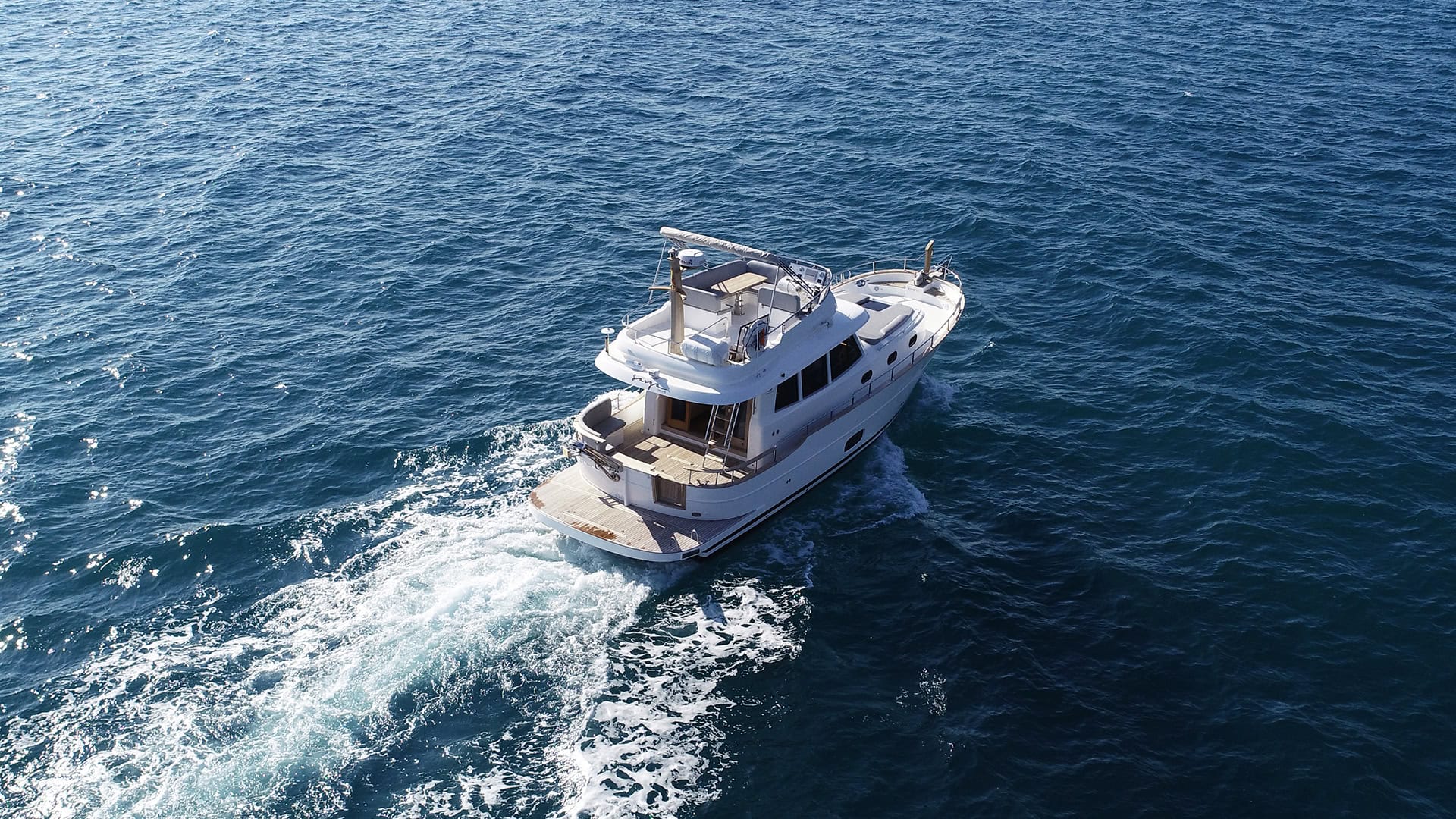
Design and comfort in the Menorquín range begin with the relationship between the shape of the hull and the engines that power it. How the yacht responds to waves and its ability to cruise at different speeds depend on decisions made during the design process.
At Sasga Yachts, naval design and construction processes go hand in hand to ensure the yacht performs as intended. Vacuum infusion allows precise control over the materials used in the hull, while optional equipment such as gyroscopic stabilisation offers additional ways to improve comfort on board.
The Hull as the Starting Point
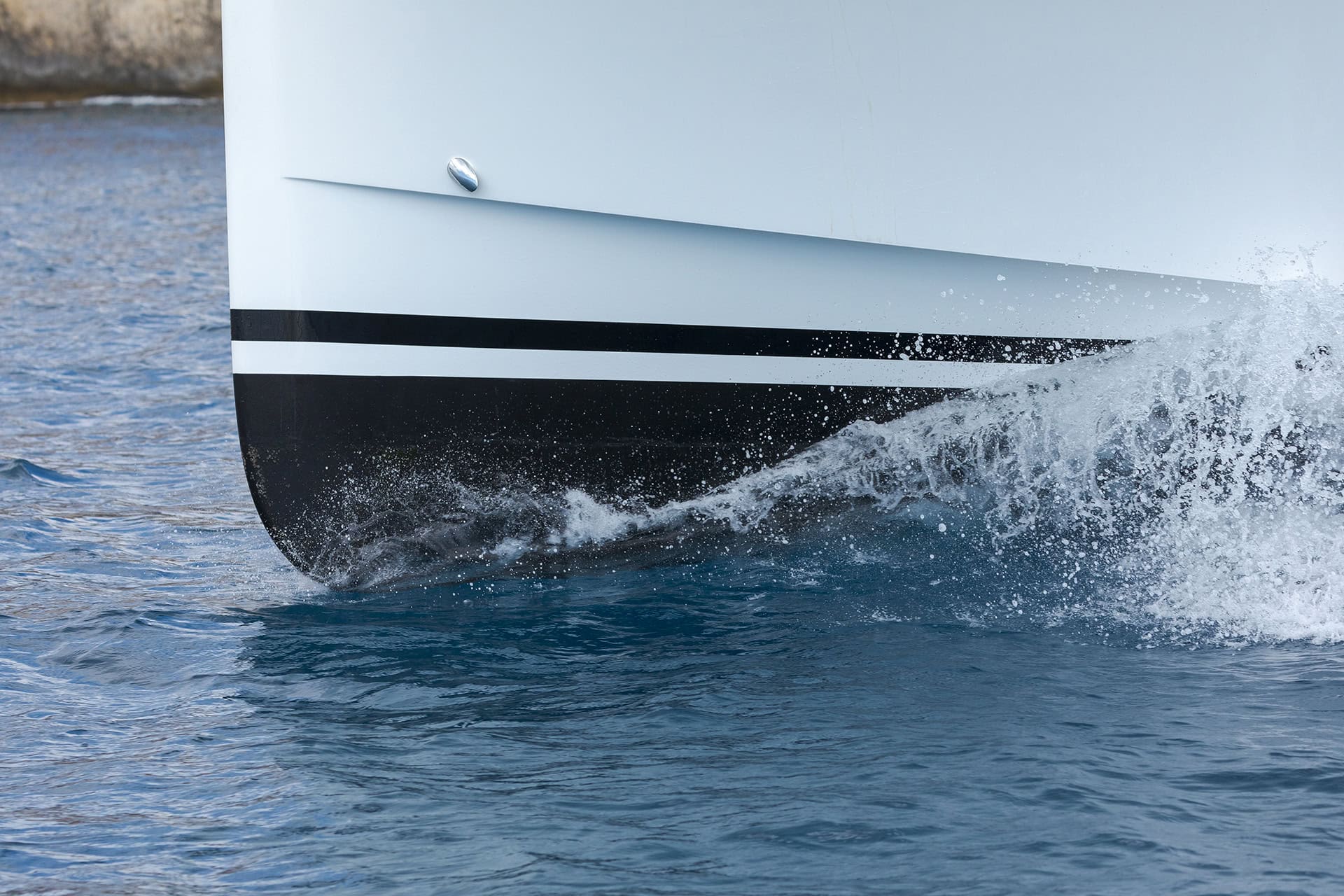
The underwater hull is the part of the hull that remains submerged. Its shape influences how the yacht moves through the water and how it responds when encountering waves.
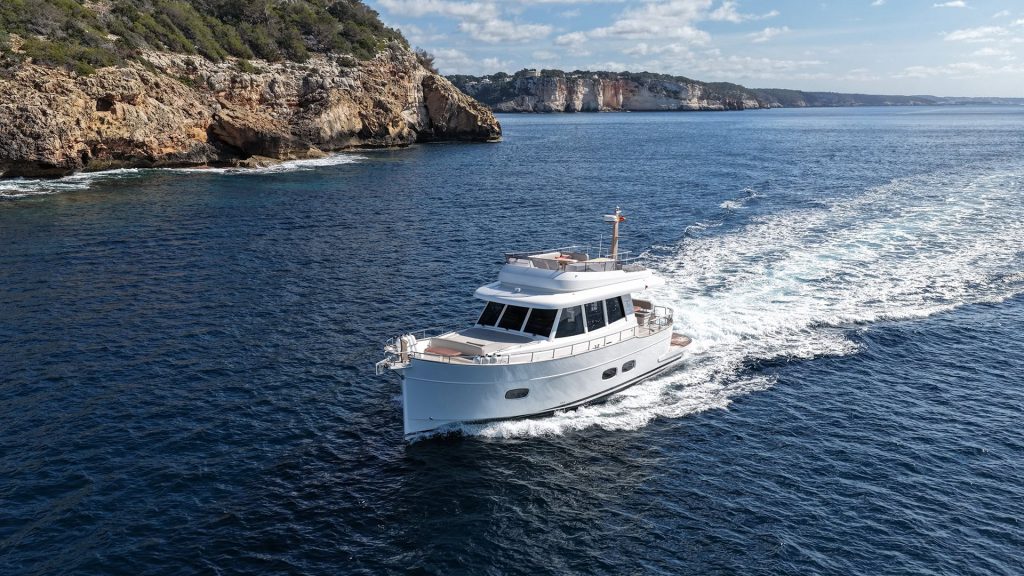
Menorquín yachts share a semi-displacement hull design with deep-V hull forms, designed by Barracuda yacht design, adaptadas a la eslora y a las características de cada modelo. El objetivo es combinar un paso confortable por la ola con capacidad para desarrollar diferentes velocidades de navegación.
This hull design allows for relaxed cruising along the coast as well as faster passages when longer distances need to be covered. Its behaviour also depends on displacement, weight distribution and load. Choosing the right speed and course for the sea conditions is part of what makes a passage comfortable.
Vacuum Infusion and Weight Control
At the Sant Lluís shipyard, hulls are built using vacuum resin infusion. Dry fibres are laid into the mould and compacted beneath an airtight vacuum bag. Resin is then introduced in a controlled process using vacuum pressure to impregnate the laminate.
This process allows the fibre-to-resin ratio to be adjusted and excess material to be minimised. The result is a more uniform laminate, with better control over the structural weight of the hull.
Weight is considered alongside the shape of the underwater hull and the performance targets set during design. Vacuum infusion makes it possible to manage this factor throughout the manufacturing process, ensuring that the hull structure meets the intended design specifications.
Engine Selection Starts with the Hull
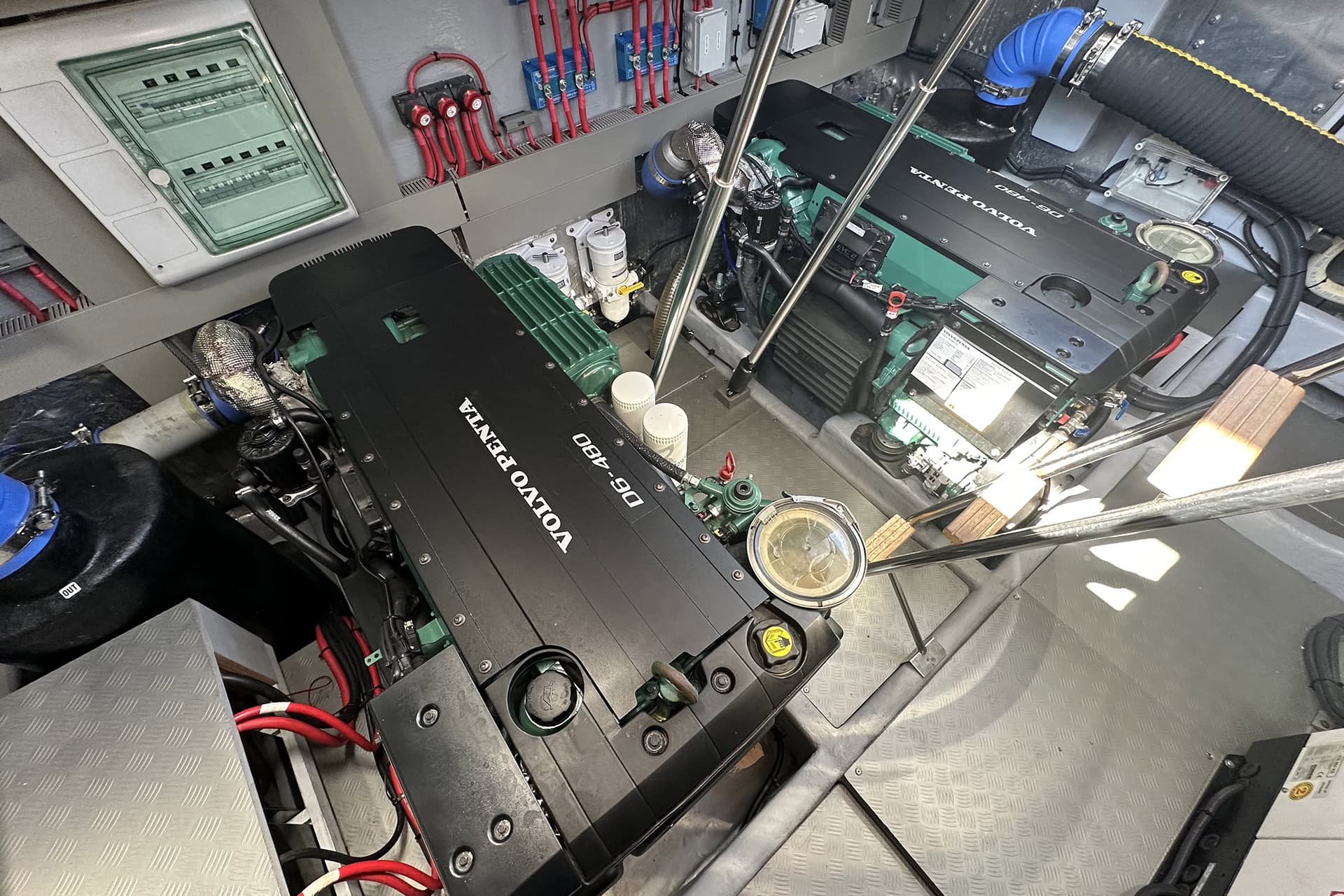
The installed engine power must be matched to the yacht's length, displacement and intended speeds. On a Menorquín, the hull and propulsion are considered as a single system: the engines supply power to the propulsion system, which converts it into thrust to move the yacht through the water.
The range features a twin-engine configuration, with power outputs tailored to each model. For reference, the Menorquín 35 HT specifications list a maximum power of 2 × 270 hp, while the Menorquín 55 FB is rated at 2 × 480 hp. These yachts differ in size and displacement, requiring engine power to be selected according to their individual characteristics.
For the yacht owner, what matters is how this combination performs at the engine speeds typically used during cruising. The choice of engines determines the available performance, while the load and cruising conditions influence the speed and fuel consumption achieved on each trip.
Performance for Cruising at Different Speeds
The specifications for the Menorquín 35, 42, 48, 55 and 68 list cruising speeds of up to 19 knots and maximum speeds of 23 knots. These figures provide a common performance reference across the cruising range, with engine configurations tailored to each yacht's length.
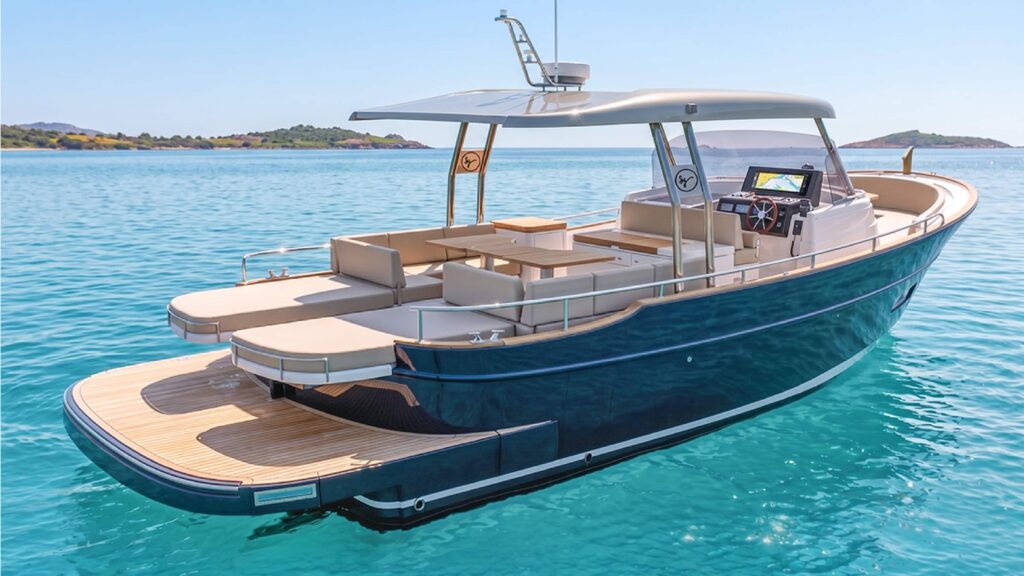
The new Menorquín 36 Open takes this approach further, with announced performance figures of up to 23 knots at cruising speed and a maximum speed of 28 knots. Its specifications include two twin-engine options: 2 × 270 hp or 2 × 320 hp, for an overall length of 11.23 metres. This choice allows each owner to tailor the configuration to their intended use and preferred cruising pace, while keeping comfort at the heart of the design.
These figures help assess the capabilities of each model. When planning a passage, fuel consumption and range must be considered in relation to the specific engine configuration, operating speed and load. Fuel tank capacity needs to be evaluated in this context.
Stabilisation to Reduce Rolling
Some yachts are equipped with an optional gyroscopic stabiliser. This system helps reduce rolling, the side-to-side movement caused by waves, improving comfort on board, particularly when at anchor.
The system works by using a flywheel that spins at high speed, generating a gyroscopic effect that counteracts the rolling motion. The system is selected and sized according to the yacht's characteristics. The degree of roll reduction depends on the equipment installed and the sea conditions.
The benefits become particularly noticeable when the yacht remains at anchor for several hours. Reducing this rocking motion makes time on board more enjoyable and can also improve comfort during the night, when the yacht's repeated movements tend to be more noticeable.
Stabilisation complements the work carried out on the hull and propulsion system. It is a practical application of technology to improve comfort, selected according to the yacht model and how each owner intends to use it.
The Result of Design and Comfort in the Menorquín Range
Design and comfort in the Menorquín range are defined from the earliest stages of development. The hull and engine configuration are designed together, while vacuum infusion construction allows precise control over the laminate and structural weight. The choice of equipment completes this process according to each owner's needs.
For those who spend time at sea, the value of this engineering lies in its everyday benefits. Being able to adjust the cruising pace and reduce rolling with the right equipment makes both the journey and time spent at anchor more enjoyable. Sasga Yachts develops its Menorquín yachts with this purpose in mind: to turn design and technology into greater comfort throughout every moment spent at sea.
Discover the Menorquín range and the technical specifications of each model.
 Spanish
 English
 German
 Italian
 French